
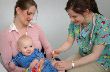



For parents and caregiverS
Accessible screening can help families better understand potential developmental concerns and participate more confidently in conversations about their child's care.
Replacing “Wait & See”:
Examining Pediatric Communication Screening and the Path to Earlier Care
A parent notices a concern. What happens next?
We asked pediatric professionals where the path to care gets stuck—and what could help families move forward sooner.

Who is this for?
This whitepaper is for anyone interested in how pediatric communication concerns are identified and connected to care, including:
A more effective screening pathway can support children, families, and clinicians at different points along this continuum.
Accessible screening can help families better understand potential developmental concerns and participate more confidently in conversations about their child's care.

Structured screening information can support more informed conversations, referral, and efficient workflows.
Parents and caregivers are often the first to notice when something feels different about a child’s communication development.
Early identification can help turn that uncertainty into understanding—giving families the information and confidence to know what to do next.
We asked pediatric professionals to identify the gaps, barriers, and opportunities for earlier, more informed action.
This study provides an expert-informed foundation for considering these questions—and for exploring what responsible AI-assisted pediatric speech screening should require. For NeuraSpectrum, this distinction is central: AI can support the screening process, but it should not replace professional assessment, clinical judgment, or the human relationships involved in care.
Explore what pediatric professionals are seeing across screening, parent involvement, technology, referral, triage and access—and what their perspectives could mean for the future of earlier identification.
The whitepaper discusses screening and early identification and does not suggest that screening results constitute a diagnosis. Professional assessment and clinical judgment remain essential.